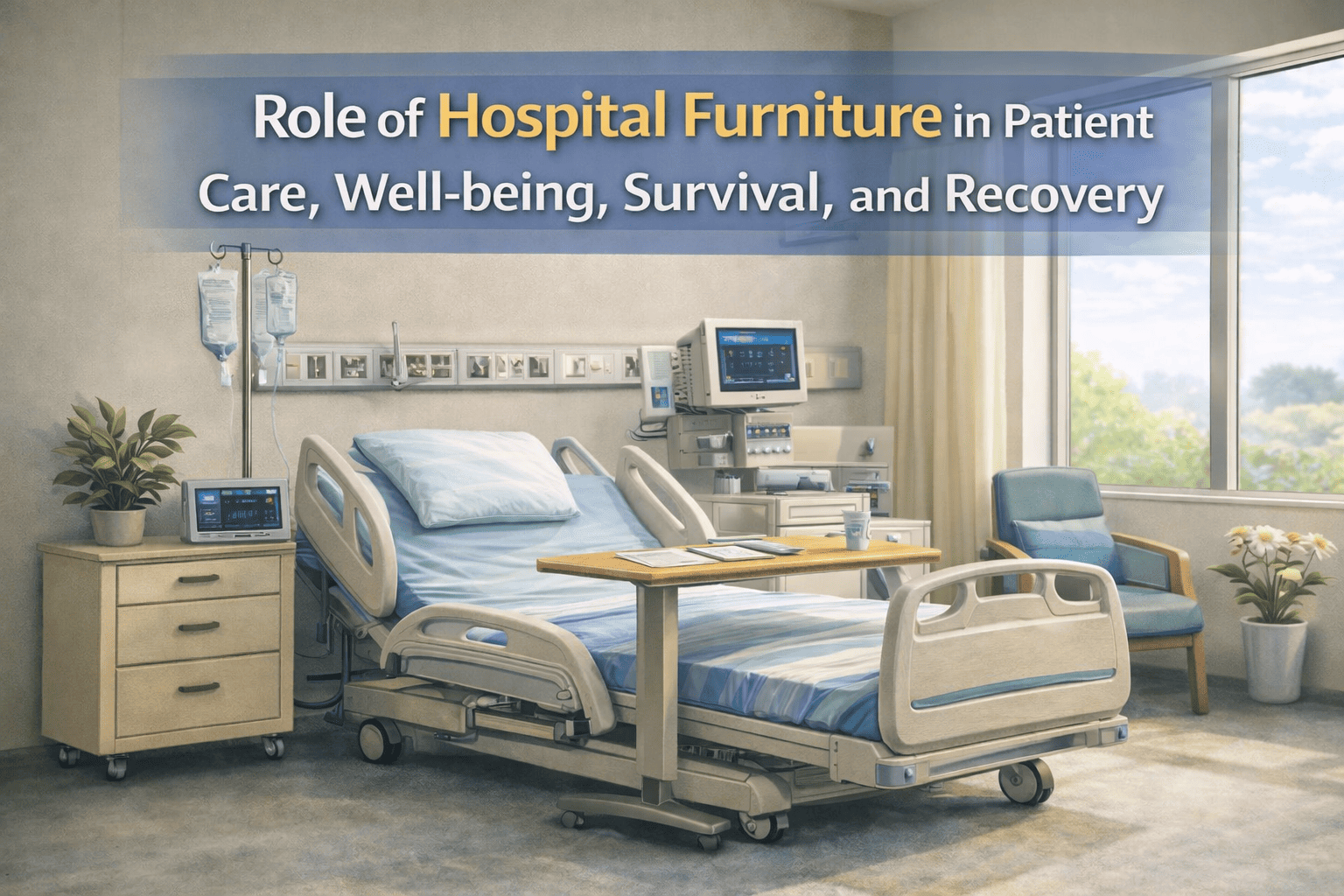
Quality of Healthcare is often associated with quality of treatment which is perceived to be related to professionals working in the facility and advanced technology being used. However, the moment a patient enters the hospital before they meet the professionals who will treat them, they look at the infrastructure and experience hospital furniture. It sets the right tone for treatment. There are many critical aspects to hospital furniture including functionality, patient comfort, staff convenience and also improving the aesthetics of the facility. Hospitals that invest in quality furniture create safer environments, strengthen patient trust, and improve overall care delivery.
Understanding Hospital Furniture
Hospital furniture is specialized equipment designed to meet clinical, ergonomic, and safety standards. Hospital furniture today has widened its scope and use case unlike traditional furniture, these pieces support treatment workflows while prioritizing patient well-being rather than simply being beds to for patients to lie down.
There are wide variety of hospital furniture items that are available to suit the needs and wants of healthcare professionals. Common types include hospital beds, trolleys, chairs and recliners, overbed tables, and operating theatre (OT) furniture. Adjustable beds assist in recovery and critical care, trolleys streamline the movement of supplies, while OT furniture supports precision during surgical procedures. Advancement in technology is rapidly changing them by the day. Together, these elements form the foundation of efficient healthcare infrastructure. Not all hospitals need all the hospital furniture options available in the market.
Impact on Patient Comfort
Ergonomic Design
Ergonomically or scientifically designed hospital furniture comforts the patient by reducing physical strain, especially the ones recovering from serious surgeries or managing chronic illnesses. Features such as adjustable backrests and pressure-distributing surfaces help prevent complications like bedsores and musculoskeletal discomfort. Electric beds have become the doctor’s first choice wherever quality treatment and patient care is the first preference.
Mobility and Adjustability
Movement is essential part of hospital furniture. The patients have to be moved from one place to another, to be lifted from one bed to another, to be kept in certain positions for faster recovery. Hospital furniture must accommodate for this movement. Traditionally beds that supported movement by manual effort and modern-day hospitals use electric beds that make it all happen by the touch of a button in a very smooth way.
Psychological Comfort and Dignity
Modern day hospitals keep special watch on the look and feel of their rooms. Hospitalization can be emotionally challenging and pain should not be aggravated by bad looking and uncomfortable furniture. Hospital prefers hospital furniture that promotes privacy, stability, and independence preserves patient dignity and reduces anxiety, fostering a healing-focused environment.
Role in Infection Control
Easy-to-Clean Materials
Hygiene is one of the most concerning issues in a hospital. Patients come to recover from illness, and not catch other infections from un hygienic conditions. Hospital-acquired infections remain a major concern, making hygiene-focused furniture essential. Good quality hospital furniture is made of materials resistant to moisture and microbial growth simplify cleaning and reduce contamination risks.
Antimicrobial Surfaces
Advanced hospital furniture comes with antimicrobial coatings that provide an added layer of protection by limiting the spread of harmful microorganisms, particularly in high-risk areas such as intensive care units and operating rooms. Such coatings are essential for sensitive and critical units.
Contribution to Caregiver Efficiency
Smooth Workflow
Healthcare professionals work in very demanding situations that need quick response. Patients with critical illnesses need extreme care. scientifically built hospital beds make the workflow smooth Strategically designed furniture ensures unobstructed movement and quick access to equipment, enabling timely interventions.
Reduced Physical Strain
Caregivers frequently lift and reposition patients. Over the period of time it reflects on their health and their capacity to deliver care as well. Ergonomic furniture minimizes physical stress, helping prevent workplace injuries while allowing staff to focus on delivering high-quality care.
Why ICU Beds Play a Vital Role in Patient Survival and Recovery
In critical care environments, every second matters. ICU beds are advanced support systems that enhance patient safety and facilitate life-saving treatment. They are advanced versions of hospital beds that facilitate movement and transition.
- Supports Rapid Medical Intervention: Adjustable heights and accessible designs allow healthcare providers to respond quickly during emergencies. Quick response is essential in many life threatening times, icu beds are a must in such situations.
- Enables Optimal Positioning Reduces Risk of Pressure Injuries
- Enhances Patient Safety
- Integrates with Medical Equipment
- Improves Caregiver Efficiency
- Supports Faster Recovery: Comfortable positioning promotes rest, strengthens immunity, and accelerates rehabilitation.
Hospital Furniture and Patient Recovery
Faster Healing Through Comfort and Proper Positioning
Recovery is closely linked to comfort. Furniture that supports correct posture and movement prevents complications while improving breathing and circulation.
Improved Patient Satisfaction
Patients increasingly expect healthcare environments that combine clinical excellence with comfort. Thoughtfully designed furniture enhances the care experience, encouraging treatment adherence and improving perceptions of quality.
Why Investing in Quality Hospital Furniture Matters
Modern hospitals are a place of healing not just receiving treatments. People are very conscious of hygiene and prioritise their comfort. Not just professionals, treatment, but also overall feel of the place is important for the patient. Therefore, as healthcare evolves, investing in premium furniture offers long-term advantages:
- Enhances patient safety and comfort
- Supports efficient clinical workflows
- Strengthens infection control
- Reduces maintenance costs through durability
- Elevates the hospital’s aesthetics and professional image
Quality hospital furniture is a strategic investment in better care delivery, that is almost necessary for sustaining in the industry going forward.
Conclusion
Hospital furniture is an investment and not an expense after professionals and medicine it is the most important aspect to patient care. Hospital furniture is an essential element of effective healthcare environments. From promoting comfort and dignity to enabling efficient caregiving and supporting critical interventions, the right hospital furniture directly influences survival rates and recovery outcomes. Hospitals that prioritize high-quality furniture position themselves to deliver safer, more compassionate, and more efficient care.
FAQs
1. How does hospital furniture affect patient recovery?
Hospital furniture provides comfort, easy movement, smooth position transition, thus supporting patient recovery and reducing any complications and accidents.
2. What features should hospitals look for in quality furniture?
Durability, ergonomic design, infection-resistant materials, sturdiness, and ease of maintenance are key considerations for quality hospital furniture.
3. Can hospital furniture help reduce hospital-acquired infections?
Yes, hospital furniture is ideally designed in a manner that it is easy to clean and built with materials that do not retain infections after cleaning. Therefore the chances of transferring infections are lesser as compared to regular furniture.
4. Why is ergonomic furniture important for healthcare staff?
Ergonomic hospital furniture is ideal for modern hospitals and professionals as they want to give their patients the best possible care at the same time take care of their health. Good quality hospital furniture reduces physical strain, prevents injuries, and enables caregivers to work more efficiently, ultimately improving patient care.